
The Role of Herring in our Ecosystem:
The importance of herring to the coastal marine ecosystem cannot be overstated. Positioned near the base of the food web, herring transform plankton into flesh and feed all the larger fish and other predators above them, including birds. No other forage fish can supply the oil and the masses of eggs that support predators on land as well as sea. Herring spawn repeatedly over their 10-15 year life span, becoming more productive the longer they live, thus provisioning the ecosystem.
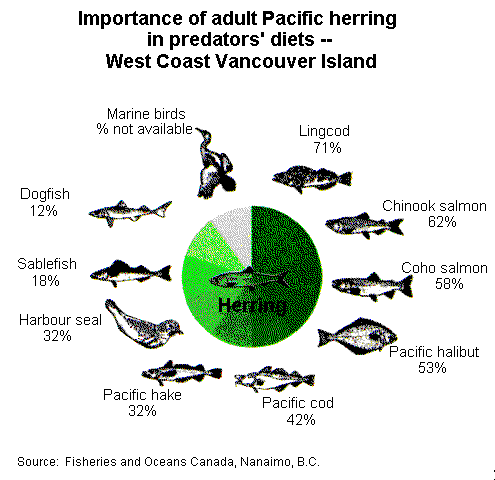
Photo: Hal Schulz
Why Herring Populations are at Risk:
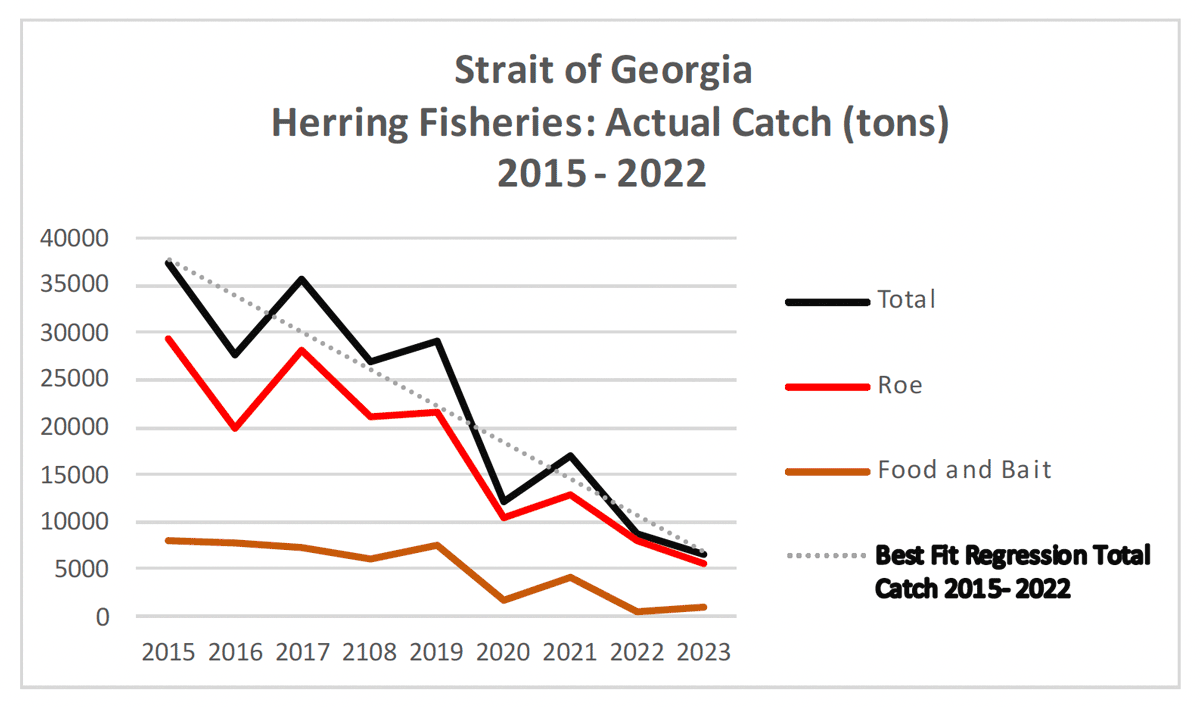
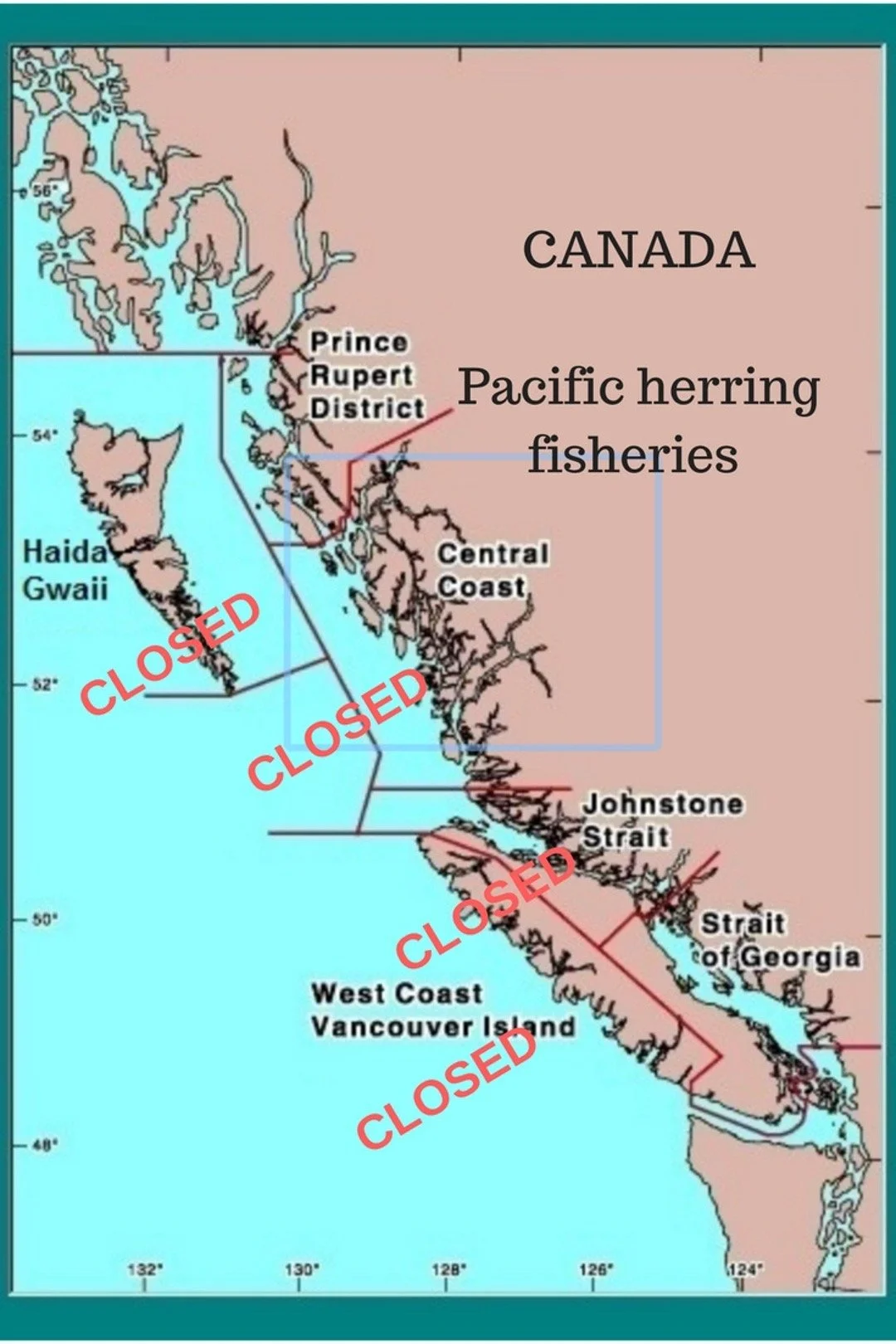
All herring populations are now much smaller than historical levels and threatened by overfishing. Herring were drastically overfished for decades and in the late sixties the herring populations collapsed coast-wide. After a four-year moratorium, the fishery was resumed, even though many smaller spawns had already disappeared, and the recovered populations were significantly diminished. Most years, four of the five stock management areas on the coast are closed to commercial fishing because of low population numbers. The only surviving stock of substantial size spawns around Denman and Hornby Islands in the Strait of Georgia, where DFO opens a commercial fishery each year, despite broad-based concerns expressed by the public, First Nations, and scientists.
The Campaign to Save Herring:
For many years, scientists, herring advocates, politicians, and First Nations representatives have made determined efforts to engage with DFO Herring Management. Despite numerous petitions, letter-writing campaigns, meetings with government, and a variety of creative community actions, we have seen no real commitment to managing the fishery more sustainably.
Ultimately, the way the fisheries are managed is political. The Fisheries Act gives the Minister of Fisheries and Oceans absolute discretion, making the Minister answerable to no one.
Photo: Rebecca Benjamin-Carey
The W̱SÁNEĆ Legal Challenge to DFO's Herring Management
The W̱SÁNEĆ Leadership Council of hereditary chiefs (WLC) called for a moratorium on the commercial herring fishery, and called the government to task for failing to uphold their right “to fish as formerly” under their Douglas Treaty. The herring were overfished in their traditional territory around the Saanich Peninsula as much as fifty years ago, depriving their people of a key source of food and income. The WLC, represented by Hereditary Chief, W̱ićkinem, Eric Pelkey, has obtained a legal opinion and intends to pursue legal action. This initiative holds promise because it challenges DFO from a legal framework outside the Ministry, where the Federal Government is accountable for fulfilling treaty agreements.
Photo: Alex Harris
How to Help Save the Herring:
The Herring Conservation and Restoration Society (HCRS) and others, including the Association for Denman Island Marine Stewards (ADIMS) and Conservancy Hornby Island (CHI), are fundraising for the W̱SÁNEĆ legal action. We invite you to donate for what could be a decisive legal win for herring restoration.
To support the W̱SÁNEĆ legal challenge, you can donate via HCRS. You can also get involved at a local level, become a member of ADIMS or CHI, and join email lists so you can be informed when new events are announced, or when volunteers are needed.
Photo: Tavish Campbell
We advocate for protection of Baynes Sound, Lambert Channel and surrounding waters.
Together, these waters are identified as an Ecologically and Biologically Significant Area. We pursue positive actions that show respect for and commitment to our marine ecosystem as a whole. We recognize that all life, including our own, depends on our oceans flourishing.